
DIGITAL PLATFORMS · SERVICE OPERATIONS · SALINTEAM

Easy Emigrate case study
Connecting digital inquiries to real operational action.
Easy Emigrate is an immigration-services digital platform combining public-facing service information with operational capabilities such as CRM-related workflows, appointment automation and customer communication. My involvement came through Salinteam's technology delivery engagement.
Project
Easy Emigrate
Company
Salinteam
My involvement
Product and software delivery contribution
Team scope
Website · CRM · Appointment automation · Marketing
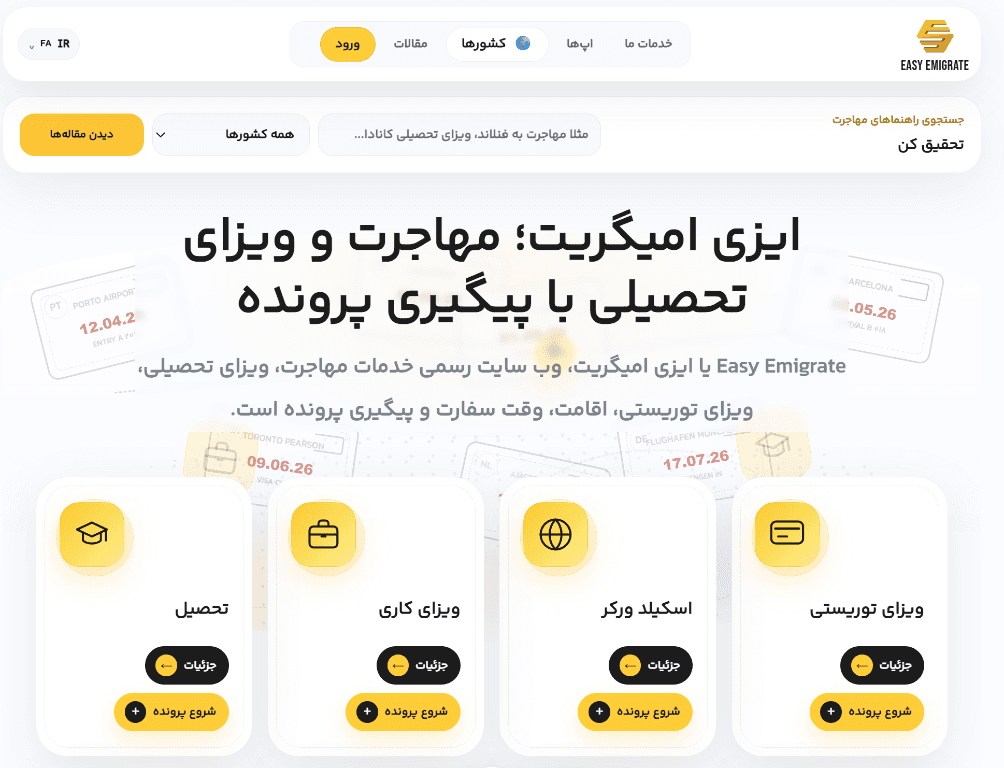
Current public website capture · November 2026
THE CHALLENGE
A service inquiry is only the beginning.
A prospective customer may begin by exploring an immigration service or submitting an inquiry. The operational process can require more information, staff review, appointments and follow-up. The product challenge is creating clarity between what the customer sees and what the organization needs to do next.
Customer experience
- · Find relevant services
- · Understand the next step
- · Submit an inquiry
- · Know whether an appointment is actually confirmed
Operational experience
- · Capture relevant request information
- · Assign an accountable staff member
- · Coordinate appointments
- · Manage exceptions and next actions
A digital service works best when the customer journey and the operational workflow support each other.
THE DIGITAL PLATFORM
More than a public-facing website.
01
Digital experience
Public-facing website and service information.
Business purpose: Discoverable services and clear inquiry paths.
Boundary: Do not infer back-office implementation from a public page.
02
CRM-related operations
The Salinteam engagement included CRM implementation scope.
Business purpose: Organize inquiries, ownership and follow-up.
Boundary: CRM vendor and exact schema are not established.
03
Appointment automation
The engagement included an embassy appointment bot.
Business purpose: Structure appointment-related requests and states.
Boundary: No guaranteed booking, vendor or government API is claimed.
04
Digital marketing
The engagement included social and marketing solutions.
Business purpose: Connect service discovery to the customer's next action.
Boundary: No campaign ROI or conversion lift is asserted.
THE DIGITAL EXPERIENCE
The customer-facing side of the system.
Current public views and supplied product-context imagery are shown to explain the business direction. They do not independently establish historical implementation ownership.
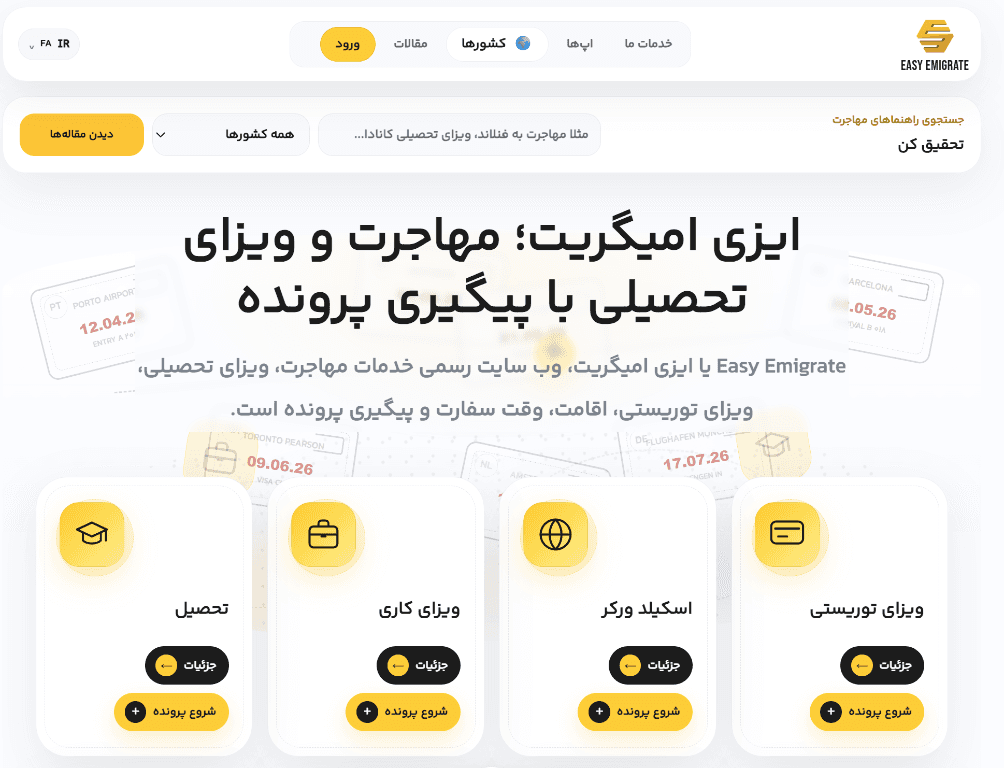
Easy Emigrate homepage
View 1 of 5
Supplied Easy Emigrate website view showing the main service-discovery experience.
WORKFLOW DESIGN
From first inquiry to accountable follow-up.
Reconstructed workflow illustration based on the documented service and CRM context.
03 / 06
Check
Actor: Service coordinator
Input: Submitted inquiry
Output: Completeness decision
Possible exception: Mandatory information is missing
Next owner: Customer follow-up
TECHNICAL DELIVERY
Connecting interfaces, information and human decisions.
The model below is a reconstructed workflow illustration, not an invented infrastructure diagram. Appointment automation is shown as a related capability rather than an assumed direct API or database connection.
Purpose: Creates a visible starting point for follow-up.
Information: Request identifier, contact and category
Responsibility: Intake owner
Failure condition: The inquiry cannot be assigned or verified.
Validation: The expected state and next owner remain observable.
Reconstructed workflow illustration · CRM vendor, appointment-bot vendor, APIs, hosting and database architecture are not established by the available evidence.
AUTOMATION & EXCEPTIONS
Automation needs clearly defined boundaries.
SCENARIO A
Appointment inquiry received
Expected behaviour: Inquiry is recorded as pending, not confirmed.
Status: Pending
Next action: Request required details and route to the responsible owner.
Acceptance criterion: Given an inquiry without confirmation, the interface must not display a confirmed appointment.
REQUIREMENTS ENGINEERING
Turning operational needs into testable behaviour.
Illustrative requirements and acceptance scenarios based on the service workflow.
Inquiry tracking
As a service coordinator, I want to identify open requests and their current owners so I can follow up without losing track of pending work.
Normal: open inquiries have an owner and status. Exception: unassigned work is flagged. Validation: inspect the open-request view.
MY INVOLVEMENT
Connecting the service model to software delivery.
My involvement with Easy Emigrate came through Salinteam's early-stage delivery engagement. The project connects two areas central to my work: translating business operations into software requirements and coordinating how customer-facing experiences support the people responsible for delivering the service.
Business needs
Understanding service processes and operational requirements.
Delivery coordination
Working within the Salinteam engagement and supporting project progress.
Workflow thinking
Considering how customer interactions relate to staff actions and follow-up.
Validation mindset
Connecting expected behaviour to practical completion conditions.
IMPLEMENTATION THINKING
Good delivery depends on the decisions between features.
Keep the journey understandable
Clear navigation, expectations and next steps help customers and staff align.
Preserve ownership
Automation does not replace the responsibility of a person or team when review is needed.
Make exceptions explicit
Incomplete information, unconfirmed appointments and unresolved requests need clear states.
THE TAKEAWAY
The workflow behind the interface matters just as much.
Easy Emigrate illustrates why digital service delivery requires more than a well-designed website. Customer inquiries, appointment processes, information requirements and team responsibilities need to connect in a way that people can understand and manage.
The current public website may include products and capabilities developed after the original Salinteam engagement. Current public pages are included as business context; historical scope and personal contribution are described separately.
CONTINUE EXPLORING